Monday, August 22, 2011

Pentecost 9: A Church of Dirty Foreigners and Uppity Women

Isaiah 56:1, 6-8
Psalm 67
Romans 11:1-2a, 29-32
Matthew 15:10-28

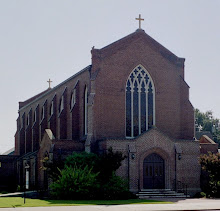
I am told there was a time the Church of the Saviour was the meeting place for the “great and the good” of Hanford, its pews filled Sunday by Sunday by the worthiest of civic worthies. And through its doors passed so many who looked to the Episcopal Church as the religious badge signifying they had “arrived”, socially, politically, economically. This is not to paint a dim picture of Hanford or of the Episcopal Church in Hanford. The situation here was hardly atypical of that in the Episcopal Church more generally – although it may have lasted longer in small towns like Hanford. The Episcopal Church was conservative, wealthy and white, and being or becoming an Episcopalian, or even being in the company of Episcopalians was a feather in anyone’s cap. If you know the film Driving Miss Daisy, there is a sure hint of that world. The Werthans are Jews, and one evening Daisy Werthan’s son is visiting his mother, but keen to get back home saying that his wife “Florene’ll be havin’ a fit if I don’t get home on time tonight.” His mother responds sarcastically, “Y’all must have plans tonight”. “Goin’ to the Andersons’ for a dinner party”, he says. She quickly observes, “This is her idea of heaven on earth, isn’t?...Socializin’ with Episcopalians!” An invitation to the Episcopal home of the Andersons was for Florene, and no doubt her other friends, a sign she had somehow “arrived”, was part of the inner circle.

But we all know that those days are over for the Episcopal Church. Some time in the 60’s or 70’s of the last century she experienced a profound conversion in which a more radical understanding of the Gospel was discerned; an understanding grounded in some of the more challenging Scriptural passages from the prophets particularly, but more importantly in a rediscovery of the ministry of Jesus himself. The Episcopal Church became somehow particularly attentive to and critical of the social, political, economic and even ecclesiastical forces that pushed people to the margins. She became critically able to draw parallels between the tribal and class solidarity which in the ancient world of the Scriptures created groups of people considered beyond the pale and how those same dynamics continued in the present and in the Church’s life itself.

It may be rather difficult for us to really understand the strict social and religious lines of divisions in ancient societies. Yet, what usually distinguishes Judaism and its daughter religion, Christianity, is their commitment to breaking down those sorts of divisions as well as their commitment to the de-privatistion not only of religion, but of God God’s self. If you recall, in the ancient world one’s god was one’s private possession, the possession of one’s tribe or nation. Other gods existed, but you hoped that yours was more powerful, capable of overpowering the gods of other peoples and therefore able to grant you and your fellows security and success. Judaism, and most particulalry the prophets, dared to suggest that perhaps the God of the Jews was the God of all peoples, and that tribal identity had nothing to do with one’s relationship to God, and by extension to others. And so the author of Second Isaiah dares to write: “And the foreigners who join themselves to the LORD to minister to him, to love the name of the LORD…will be accepted…for my house shall be called a house of prayer for all people.” (Isaiah 56:6, 7) God cannot be the private possession of Judaism, nor of anyone. God is God, the God of all creation and there is no other; and if there is no other than certainly this God must be God of the Jew and of the foreigner alike.

Of course, the temptation to possess God is a powerful one, and with enough religious and social power the appearance of possessing and controlling the divine is easily achievable. Jesus’ generation had listened no better to the prophetic vision than had previous ones; or our own for that matter. Religion had a become a way to feel superior, virtuous and pure. So when a foreign Canaanite – and a woman at that – approached Jesus in the crowd imploring he heal her daughter, his reponse was the enculturated one: “I came only for the lost sheep of the house of Israel” (Matthew 15:24) and then he insulted her in her foreign origin – “dog” is a term of abuse regularly leveled at foreigners: “It is not fair to take the children’s food and throw it to the dogs.” (Matthew 15:26) It is not easy for Christians to see Jesus in this unfavourable light, but it does highlight the power of group or tribal identity, that even Jesus bought into it, at least initially. The woman out of bravery or shere desperation challenges Jesus, challenges his vision of God and of God’s kingdom. Perhaps Jesus recalled the words of the prophet or perhaps he remembered his own outcast status, but not only does he include both the mother and daughter in God’s world of salvation and redemption, but he commends the mother’s faith: “Woman, great is your faith.”

Immediately, after this incident (although not included in today’s gospel passage), the writer of Matthew relates how were brought to Jesus “the lame, the maimed, the blind, the mute, and many others…and he cured them.” (Matthew 16:30) For curing one should read “including”. Social and religious convention dictated that like foreigners, those “damaged” or in any way disabled were also not part of the plan. God was the God of the able, not the broken and that indeed their very brokenness – whether physical or emotional – signalled their impurity, their alienation from the divine. For this reason in the gospels the question of sin is never far from the issue of illness deformity. Jesus’ parable in which a great party is hosted and none of the invited guests come highlights the same reality. Being turned down by those invited the host commands the servants, “Go out at once into the streets and lanes of the town and bring in the poor, the crippled, the blind, and the lame. Go out into the roads and lanes, and compel people to come in, so that my house may be filled.” (Luke 14:21b, 23b) One can see how the circle continually widened, and the early Church became the place for the broken, the damaged, the dirty foreigner and the “uppity” woman.

How far we have come from that early Church of the broken, the damaged, the misfit and misfitting. One of the aspects of the Episcopal Church that makes me most proud is how her conversion of spirit and direction has played out specifically with regard to those our world today considers damged or broken, those whom many churches consider beyond the pale of Christian life and Christian society, and hence beyond the reach of God’s love. I love how our Episcopal Church, like that host in the parable, has gone out into the streets and lanes of life and specfically welcomed those the world has made poor, whom society has labelled as moral cripples, those whose vision is compromised by the labels placed on them by others, those who have been so abused and demoralised by the powers that be they cannot even hardly walk with any dignity at all. The Church has broken down the walls and divisions, the theological cliques and spiritual huddles and said – “Come, you too are welcome. You are included. The message of salvation is for you too.” This has cost the Episcopal Church much, and for that reason makes her welcoming inclusion so much the more meaningful.

Many people ask me what my vision is for our parish. More and more I feel that I would like to see our parish further incarnate the reality of God’s love and invitation to the broken and damaged, the misfits. When so many churches find themselves obsessed with truth and certainty, I would like to be the Church that says, “Your doubts are welcome here. We don’t know either, but perhaps together we can find something of an answer”. Where so many churches brandish a simplistic understanding of family and family “values”, I would like to be the Church that says there are many wonderful ways of being a family and here in the household of God all are valued, accepted and affirmed, all recognised as sacred. When so many churches walk around as if they possessed God, I want to be the Church that says and really believes, “We can’t possess or own God, God owns us and that means we will always live out of the reality that God is already with us and with everyone.” When so many churches want to continue living by purity laws in order to feel superior, I want a Church of “dirty outsiders”, of the broken and damaged, of those who are far too aware of their imperfections; a Church that invites others who just do not quite fit in. I think we should be that place, that Church, in Hanford. I think we should want to be it. I think we are already becoming it, going some way to fulfilling that vision of Jesus and the prophets in which divisions come down and a new society is created in which all people are gathered together – foreigner, stranger and neighbor alike.

Pentecost 8: Silence, Darkness and Presence

1 Kings 19:9-18
Psalm 85:8-13
Romans 10:5-15
Matthew 14:22-33

Two aspects of life – constant realities to our ancestors of just one hundred years ago – are virtually unknown to us today, namely sheer silence and utter darkness. What passes for quiet or dark in the modern world would be piercing and brilliant to those of earlier generations. And particularly those of us who grew up or lived in truly urban areas, we forget how accustomed we are to the backdrop of sound and light – which are, in fact considered to be hallmarks and indicators of modern living, of modern civilisation. Indeed, we find that for many people the absence of both or either makes them to feel inordinately and inexplicably uncomfortable, frightened even. When was the last time you sat in a dark room, and listened to the sheer sound of silence? Or sat silently with a friend for a length of time? How long before it became rather unnerving? How long before the thought “I must get up and do something, I must think of and say something” won out over the posture of simple presence? Undoubtedly, both silence and darkness carry with them uncomfortable resonances of fear and of the unknown; most certainly they carry with them resonances of death – “dark and silent as the grave” the saying goes. And certainly very practical reasons may abound for the steady eradication of darkness and silence from our modern world, but the therapist in me cannot help but consider it – in part – as indicative of an increasing human need to avoid naked presence to ourselves, to one another and to God; the human need to be in control.

For those of us uncomfortable with the dark, uncomfortable with silence it may be disconcerting to come across the observation that in the Judaeo-Christian tradition it is in both silence and darkness that God and God’s purposes are continually revealed. Clearly this is true in Elijah’s encounter with God on Mount Horeb. The very human expectation of God revealing God’s self in obvious power – wind, earthquakes, fire – is almost ridiculed in the narrative with the re-current trope “but the LORD was not in…” the wind or the earthquake or the fire, as each case may be. It is rather when Elijah can bring himself to hear the sound of sheer silence, that any revelation of God can be made. It is only when he can trust the silence and make himself present by stepping out of the cave, stepping out from himself, hat he can understand who God really is in this situation and what God is saying. Job similarly recounts “Amid thoughts from visions of the night, when deep sleep falls on mortals, 
dread came upon me, and trembling, which made all my bones shake….A form was before my eyes; there was silence, then I heard a voice: “Can mortals be righteous before God?
 Can human beings be pure before their Maker? (Job 4:13-14, 16b-17). In the Gospel of Luke we see how it is only after he has been made mute that Zechariah, the father of John the Baptist, can come to understand God’s real purposes.

Few of us like being driven into the silence, but it is only in the silence – the sheer silence – that we can really hear both ourselves and God. Ironically, also it is in the dark that we can ever really see. Despite the image of light in the Tradition, the great events of salvation history seem to happen in the dark – the parting the Red Sea and the salvation of the Hebrew children, the nativity, the crucifixion, which even while taking place in the middle of the day is an event shrouded in mysterious darkness, and Christ’s vindication over death happens from within the darkness of the tomb, hidden from human sight; and each of these events carry with them a fearful and dangerous element. It was in the darkness of night and the semi-darkness of early morning, with its attendant fears – after all, when we find ourselves in the dark and fearful even the revelations of God my seem deceptive and untrustworthy – yes, it is in that darkness that Peter is called to trust, that he is called to come to Jesus over the water. And even though he falters, even though he sinks, this encounter in the darkness of the early morning and amidst the darkness of his doubt is instrumental in bringing the others to faith: “And those in the boat worshipped [Jesus] saying, ‘Truly you are the Son of God.’ ” (Matthew 14:33) Darkness can rob of us the ability to see, both physically and intellectually, and yet may open us up to understand what we thought to be impossible or make us to give up the control which seems too easily grasped in the light.

Conventional prayer notwithstanding, nor traditional images of a God resplendent in light, there are in the frightening experiences of both silence and darkness revelations of God’s nature and work which can be communicated in no other way. Perhaps this is true because of the posture in which both silence and darkness places us, that of sheer and naked presence; but with that nakedness comes also a disconcerting uncomfortableness from which we readily seek to flee. After all, who I am if I am not talking? Who am I if I can not see things clearly? I establish my persona with sound and I carve out by path and future in light, and that is certainly good and beneficial. Each one of us, after all, must make her or his own way in the world. However, the attendant and unspoken fears are that if I cease to speak I may just cease to exist, and if I cease to construct my life and plans in the “garish light of day”, I may well lose my command over both. As I hinted at the start, I have for a long time believed that the noisy world we have built and the seemingly endless idle chatter we create, as well as our obsession with light and almost unending need “to see it all” – both physically and intellectually – are indicative of a fear of death, the ultimate loss of control. And it is all about control. If I can paraphrase the words of Marilyn McEntyre from her book, Caring for Words in a Culture of Lies: “noise [and light insulate] us from the silence [and darkness] that [expose] us to encounters with self and God, and the voice of the Spirit that groans within us in ways that we may not control. To choose silence [and darkness] is to risk that encounter.” Another way of speaking about encounter is presence. To choose silence and darkness, then, is to risk presence – naked presence – before God and before each other.

Think for a moment what it would feel like to stand or sit before another – a friend, a partner, a child; to sit before them in silence and to sit with them in intellectual darkness, that is laying aside any preconceived notions or ideas about who they are, laying aside what we think we know, all that we project onto them. Imagine sitting before that person in absolute and naked presence. Funnily enough, the better we think we know the person, the more difficult the exercise becomes. It can become even frightening as we lay aside our controlling and well-practiced tools of encounter: our words and our light. How long do you think you could bear it: five minutes, ten minutes thirty minutes? As is with others, so it is with God. For so many even seasoned Christians, the posture of silence and darkness, the posture of naked presence, are fearfully frightening or completely unknown in their prayer or spiritual life, in their relationship with God. With their words and their glaring light, they carry God in their pocket. Their religion is sure, confident and above all controlled, according – not to God’s – but to their own will and purposes. So few of us even seasoned Christians step out of our comfortable and controlled cave into sheer silence and uncertainty; so few of us even seasoned Christians step out from the safety of our little boat and into that fearful and precarious darkness. So few of us even seasoned Christians step out at all, risk our dying to control, risk the encounter of naked presence.

Ultimately, if we cannot countenance silence, if we cannot bear darkness, the path to a genuine relationship with God becomes extremely difficult, if not altogether impossible. Our relationship with God can only ever be a relationship with our projections, our words and our thoughts, a mere exercise in control. Ironically, sound and light obscure our ability to see and hear. In a world of increasing sound and decreasing darkness, in a world where control and self-assertion are more and more prized and rewarded, this is perhaps one of the most important and appropriately counter-cultural posture religious persons have to offer the world. The posture of silence, the posture of darkness, the posture of naked presence.

Tuesday, August 2, 2011

Pentecost 7: Banquets, Kings and Kingdoms

Isaiah 55.1-5
Psalm 145.8-9, 15-22
Romans 9.1-5
Matthew 14.13-21

It it sometimes difficult to come to grips with the truly creative genius behind the composition of the Gospels; not least of which because of the nature of the lectionary. Too often because specific episodes in the life of Jesus are isolated and stand alone on a Sunday morning, awe can miss much of their intended impact and meaning. I often told my students on the Reader Training Course in Southwark diocese that in preparing their sermons it is not enough to look at the text itself, but what comes before it and what comes after. Today’s lectionary selection is an excellent example of this. Both the reading from the Hebrew Scriptures and that from the Gospels centre around the feeding of God’s people, indeed a banquet of abundance grounded in the spirit of divine hospitality and generosity: “Ho, everyone who thirsts, come to the waters; and you that have no money, come, buy and eat! Come, buy wine and milk without money and without price.”(Isaiah 55.1); “And [the multitude] ate and were filled…and those who ate were five thousand men, besides women and children.”(Matthew 14:20, 21)

But there is another banquet in this narrative; a banquet hidden from our eyes by the lectionary, and which sheds light on that impromptu banquet in a deserted place. Indeed a banquet, without which we can not fully comprehend the meaning of the feeding of the “five thousand men, besides women and children.” This other banquet does not take place in the wilderness, but in a royal palace. Its guests are not weary-worn travellers, but prominent and noble citizens of Judea. Its outcome is not life and refreshment, but death and betrayal. It is the banquet at which the daughter of King Herod’s wife asks of her step-father the head of John the Baptist and gets it. For the Matthean and Markan communities at least, these two stories must have had a joint siginificance, because both place Herod’s banquet directly before Jesus’.

These two kings — and two kingdoms — are purposely set side by side, and the significance of that would not be lost on the original reader, hearer. In placing together these two narratives, the writers allude to strong cultural and religious symbols of the Hebrew Scriptures and of first-century Judaism: God’s feeding of the children of Israel with manna in the wilderness, and also the anticipated eschatological banquet promised after the apocalyitic cataclysm when God would end the old age (and all forms of distortion and evil) and establish the divine reign in its fullness; and perhaps much more simply is the contrast in these two narratives between slavery and exodus, between Egypt and the desert, between Pharoah and Moses. At same time the writers use these traditional and potent cultural and religious images to point to the future, a new way to be the people of God in the world. In hearing the story of the feeding of the multitude no Christian — whether two thousand years ago or today — could possibly be deaf to the resonance with still another meal, the meal we celebrate Sunday by Sunday: Jesus, “taking the five loaves and the two fish,…looked up to heaven, and blessed and broke the loaves, and gave them to the disciples, and the disciples gave them to the crowds.” (Matthew 14:19) So there is here still another hidden banquet, the banquet of the Eucharist. The banquet that for Christians is not only a foretaste of the eschatological banquet at the end of the age, but the very sign that the consummation of the age has already begun. And so, contrasting the banquet of King Herod in his palace and the banquet of the eternal King in a deserted place, the evangelists point to the banquet of another kingdom – the kingdom of God. We can thus begin to see how subtlely and how cleverly are crafted these narratives; and that as they invited the original readers and hearers to the resonances of the past and the vision of the future, it is the hope that they do so to us today.

For me, I suppose, there arise several questions from my encounter with these resonances, and while I claim to be a citizen of the Kingdom of God, I do wonder in which kingdom I spend most of my time,and while I share regularly in the banquet which is the foretaste of God’s ultimate victory, I do wonder sometimes where I eat most of my meals. The fact is that I spend a lot of time in the kingdom of Herod, and I think that if we are honest we all do. Perhaps, execution is not a regular part of our agendae, but that is the more overt accident of that kingdom. If you are like me, I find that I live in its more sublte aspects. I live in a kingdom in which I am served, much more that I serve; I eat at banquet in which I am the guest much more than I am the host; I live in a kingdom in which like Herod, I sometimes turn away from doing what I know to be right in order to save face or reputation; I eat at a banquet in which I am always acutely and selfishly aware of how little there is to go around, because I cannot fully trust a God who sends manna from heaven.

The contrast to all this is that banquet in a deserted place in which, like all of Jesus’ disciples we are all called into God’s own work of service and compassion. It is the banquet in which God is praised for the good things provided and then we are instructed to distribute them, to share them. It is the kingdom where we all of us sit down on the grass together close to the ground from which which were created, and regardless of social precedence and position. It is the banquet where no one goes away hungry and there is more than we could ever have asked for or imagined. It is the kingdom where we are called into personal responsibility for care-taking of the creation and for the well-being of the most vulnerable in our world.

And we do all this because of what happens here, in this place, within these walls We commit ourselves to live this way because we learn it at the table of the new creation, at the banquet of the kingdom. It is here that we practice the life of the kingdom in which the greatest is the servant of all, in which we all stand equal before each other and before God, in which everyone one is welcome and everyone included. The People of God — the Church — and the Eucharist are the places where we should be experiencing the prefiguring of God’s reign in order that we can go back out into the world and work within it towards the fullest revelation of God’s reign and God’s purposes. This banquet is the training ground for how to eat at the banquet of Herod, the banquet of the world; and not just how to eat at it, but how to transform it.

Yes, the fact may be that we live at Herod’s banquet with its jostling for position and regard, with its pomp and prestige, it surreptious and even deceitful dealings; but our calling is that banquet in a deserted place where we are invited to sit on the grass with out sisters and brothers, where we give thanks to God for the goodness of the earth and creation, and where God God’s self calls to us in welcome and generosity: “Ho, everyone who thirsts, come to the waters; and you that have no money, come, buy and eat! Come, buy wine and milk without money and without price. Listen carefully to me, and eat what is good, and delight yourselves in rich food.” (Isaiah 55:1, 2b) We also gather as the Lord’s people around the Lord’s table to learn how to behave at that second banquet, how to respond to that call, how to listen carefully to the Lord, how to eat what is good; how to be formed into a people who shall be a witness of God’s reign to all peoples, calling them by our lives and actions to its fullest revelation in order that “the kingdom of the world may become the kingdom of our Lord and of his Messiah” (cf Revelation 11:15), the kingdom of justice, compassion, kindness, mercy and peace.

Tuesday, July 26, 2011

Pentecost 6: The Upside-Down Kingdom

1 Kings 3:5-12
Psalm 119:129-136
Romans 8:26-39
Matthew 13:31-33, 44-52

Like any good teacher, any good rabbi, at the conclusion of his teaching, Jesus asks his disciples, “Have you understood all this?”. (Matthew 13:51a) And, of course, his disciples like good students answer “Yes”, (Matthew 13:51b) or as one of my favourite translations renders it: “Of course” But do they; do they really? How many of us have claimed to understand “x” or “y” in order to simply save embarrassment? How many times have we nodded or smiled ourselves into intellectual, philosophical and even emotional dead-ends because we were unwilling to expose our ignorance, even our stupidity? Or worse, how many times have we convinced ourselves we understood? Our agreement being a kind of intellectual sloth. After all, it is easier to say “yes”, than to ask “how” or to think “why”. From the gospel narratives as a whole it seems clear that Jesus’ disciples understand little of what he meant, and while they might nod, agree and even, like Peter, declare Jesus to be “the Messiah, the Son of the living God.” (Matthew 16:16) their understanding was ever so limited, and they bumbled along continually missing the point.

But why should they get it, really? What Jesus talks about goes so very much against the grain of the received “wisdom” – and I use the term in inverted commas; it goes so much against what makes conventional sense. They like Jesus, they love Jesus, they follow him, but they must have questioned the practicality and the reasonableness of his teaching. Why should anyone, how could anyone, sell everything he or she has and buy one pearl, for example? How can God’s reign be compared to a mustard weed, a shrub, when the cedars of Lebanon as described in the book of Ezekiel are so much more noble (cf. Ezekiel 17:22-23); or the apocalyptic tree descibed by Daniel is far more consonant with a powerful, towering kingdom: “there was a tree at the center of the earth, and its height was great. The tree grew great and strong, its top reached to heaven, and it was visible to the ends of the earth”? (Daniel 4:10b-11) How can God’s reign be compared to leaven, when every Jew knew that leaven, yeast, represents sin, evil, corruption, while the lack of leaven signifies that which is pure and holy? Yes, one can hardly blame them, because Jesus is not merely teaching the conventional wisdom, he is not even teaching the conventional wisdom in a new way, but he is asking of his followers something much more fundamental. He is challenging them with a new paradigm, a new world view. He is challenging them with what one New Testament scholar called ‘the upside-down kingdom”.

The values of Jesus, the values of the Kingdom he heralded, fly in the face of the received wisdom, they certainly fly in the face of social convention. At their most powerful they can offend and even disgust. The disciples may politely say “Yes, of course, we understand”, but as first century Jews they would more than likely be disgusted by some of the suggestions Jesus makes about the reign of God, by some of the actions he takes in proclaiming it. Jesus tells stories about collaborist tax collectors being justified before God, about heretical Samaritans being good and righteous, about financially and sexually profligate sons being received with joy into the bosom of their fathers. He speaks with women in public, touches the dead and lepers (who are as good as dead), and of course he sits down to eat with foreigners, whores and any number of dirty, unclean people. The disciples might say, “Yes, of course, we understand” but one would hardly be surprised if under their breath they just might utter “but we don’t believe it”. And, so, as I suggested earlier, they find themselves at an intellectual dead end because they cannot make that leap into a bigger vision, into a different paradigm.

Now Solomon does. The conventional wisdom of his age dictated that kings first and foremost be powerful – powerful over their subjects and over their enemies – and that that power resolve itself in conquest and wealth. They needed cunning skill and a healthy dose of mistrust. But when Solomon is asked by God directly what he should desire above all else to facilitate his reign, the new king asks for none of these, but rather “an understanding mind to govern your people, [and the ability] to discern between good and evil.” (1 Kings 3:9) He opts for the counter-intuitive request of wisdom. By this request he made his kingdom an “upside-down” kingdom, and thus inaugurateted a new understanding of monarchy, one which would influence the idea of monarchy well into the 18th and 19th centuries in Christian Europe, certainly. He was, perhaps, history’s first philosopher king. Nevertheless, without question, his request would have been seen as foolhardy, weak, unworthy of a real king, of a real man. His request might bring into question his prowess and willingness to fight; to his contemporaries it might signify an inversion of his maculinity, as digusting a prospect to the ancient world as it is among many less enlightened people today. And let’s face it, all his wisdom nothwithstanding, the kingdom of Israel did not surivive united after his death; and this reality makes us once again face the unconcventional wisdom of the “upside-down” kingdom, for example, that in it there is something more valuable than simply surviving intact: “unless a grain of wheat falls into the earth and dies, it remains just a single grain; but if it dies, it bears much fruit.” (John 12:24)

In the twelfth chapter of the letter to the Romans St Paul writes: “Do not be conformed to this world [or, age], but be transformed by the renewing of your minds, so that you may discern what is the will of God – what is good and acceptable and perfect.” (Romans 12:2) There may be much to commend the wisdom of this age, the kind of wisdom that helps us get on in the world, the common-sense shrewdness that teaches us to hold on to what we have, and allows us to conventionally discern who are our friends, who our enemies, and who are beyond the pale altogether. Indeed an entire life can be lived – and by certain standards, successfully – saying yes when we are not really sure and agreeing when we do not really understand; a whole church life can be lived saying, “Yes, of course, I understand” while my un-renewed mind silently utters “but I don’t really believe it”. Like the disciples, we may like Jesus, we may love Jesus, we may follow Jesus, but there is not a person in this place who has not questioned the practicality and reasonableness of the teachings of Jesus: “If I give myself over to the varieties of life’s little deaths, will I really discover a life more full, authentic and meaningful? If I share even the little I have, will there really be enough for everyone? If I ask for wisdom rather than success, will everyhing really be alright even when they seem to be falling apart? If I embrace what seems disorientating chaos and social confusion, can I trust that a far more beautiful order – a divine order – will emerge that has nothing do with my control or manipulation?” It does not make sense. It is too much to ask. It requires an unqualified and frightening leap; a leap from the conventional and conventionally rational into something not altogether immediately discernable, but at its core trustworthy nevertheless. It is a leap into that place where we can stop pretending to understand, and simply say “I believe, Lord help my unbelief”. (cf. Mark 9:24) It is the leap into the “upside-down” kingdom in which leaven is holy, treasure is discovered in the most unlikely of places, shrubs become trees, and letting go is the only way to have everything.

“Have you understood all this?” Probably not. But then neither have I; and yet at moments I find myself almost coming to believe it. I hope you do to.

Tuesday, July 19, 2011

Pentecost 4: Hearing the Call and Doing

Isaiah 55:10-13
Psalm 65
Romans 8:1-11
Matthew 13:1-9, 18-23

In the prayer book of the Anglican Church in New Zealand, the lector ends the readings with the words, “Hear what the Spirit is saying to the Church”. Such an acclamation is certainly resonant with Jesus recurrent injunction throughout the gospels: “Let anyone with ears listen” (Matthew 13:9) and with the recurrent phrase in the Revelation to John: “Let anyone who has an ear listen to what the Spirit is saying to the churches.” (e.g. Revelation 2:29) Yet there is a difference in the New Zealand acclamation and those biblical verses: the first uses the word “hear” the other two the word “listen”, and so their relationship begs the question: What is the difference between “hear” and “listen”? Certainly, the Greek of the New Testament has two different words for “hear” and for “listen”; in fact, in some ancient copies of Matthew the verse reads, “Let anyone with ears to hear listen.” In a more recent modern translation the passage reads, “Anyone here with two ears had better listen”. Now the lectionary does rather a cheat with today’s Gospel in that it implies that throughout Jesus is speaking to the same group of people. But if you notice the citations, the passage is filleted; verses 10-17 are not included. The fact is that when Jesus tells the parable he is speaking to the crowds at large. That’s verses 1-9. But when Jesus is explaining the parable in verses 18-23 he is actually speaking only to his disciples. When Jesus speaks to the crowds generally he uses the word “listen”: “Listen. A sower went out to sow.” (Matthew 13:3b) When he explains the parable to his disciples, those who have already made a commitment to follow him, he uses the word “hear”: “Hear then the parable of the sower” (Mathew 13:8) And in explaining the parable he continues to use the word “hear”. The difference between “listening” and “hearing”. He calls the crowds to “listen”, he enjoins the disciples to “hear”.

Listening is fundamentally a passive, interior activity. So much so that the term “active listening” has had to be invented to demonstrate that – in counselling, for example – something is being done even when the counsellor is simply listening. Hearing on the other hand suggests or even demands some kind of action. In Jesus’ explanation of the Parable of the Sower each of the times he uses the word “hear” it is coupled with some action, even if the action is mis-understanding or despondency. The injunction to listen, it seems, is for the un-initiated, for those who are still processing the information in order make a decision. Listening is for those who are still trying to discern if there is truth in what is being spoken; for those who are still wondering if they can make or want to make a commitment. But those who have made a commitment – like the disciples, like you and me – then we are called to hear; hear with both ears; hear and do something. The call to hear is for the initiated for those who say that they have made a commitment, and it always carries with it the call to action.

If we are Christians then we have made the commitment. In one sense, we cannot fall back on simply listening, but we are hearers and that means acting, acting because God and God’s kingdom depend on us, depend on our work. Those of us who have heard the call of Christ know that we must respond. Those who have heard the word and invitation of God are ultimately called to bear fruit, and to offer back to God and the world something meaningful, a rich harvest: “my word…that goes forth from my mouth…shall not return to me empty, but it shall accomplish that which I purpose, and succeed in the thing for which I sent it.” (Isaiah 55:11)

If you are a hearer of the word, committed to the Way of the Christ, what are you doing? What are you offering back to God? What is your adherence to the word yielding in the world? The writer of the Epistle of James reminds us, “rid yourselves of all sordidness and rank growth of wickedness, and welcome with meekness the implanted word that has the power to save your souls. But be doers of the word, and not merely hearers who deceive themselves.” (James 1:21-22) Each of us have heard the word; in baptism each of us have had the living word of Christ implanted in us, but what have we done? Have we abandoned it to the rocky, inaccessible places of our lives? Have we let it wither through well-meaning but unfulfilled intentions? Have we choked it through negligence or warped priortities? Or have we been faithful to the what we have heard and yielded a return – thirty, sixty, perhaps a hundredfold? Only each of us can answer these questions for ourselves. But we must examine oursleves and make some kind of answer to those questions, lest we discover that the the word we have heard, the word implanted in us ultimately returns empty, yields nothing, and we miss altogether the divine partneriship into which we have been called, miss altogether the word of the kingdom.

Hear the parable of the sower. Hear the call. Hear the invitation. And as Jesus says to his followers, “What I say to you in the dark, tell in the light; and what you hear whispered, proclaim from the housetops.” (Matthew 10:27) Do, act, proclaim by word and by deed the good news you have heard, the word that has been implanted in you so that God’s truth does not return to God empty but bears fruit in us and in our world, yielding a harvest of joy, peace and justice.

Pentecost 3: The Righteousness Game

Zechariah 9:9-12
Psalm 145:8-15
Romans 7:15-25a
Matthew 11:16-19, 25-30

“I do not do what I want, but I do the very thing I hate….For I do not do the good I want, but the evil I do not want is what I do”. (Romans 7:14, 19) As we read through this passage we encounter a confused and confusing thought process revealing an internal struggle within Paul which it is clear he himself cannot entirely comprehend. Indeed, he says as much: “I do not understand my own actions.” (Romans 7:15) Certainly things had changed for him with his conversion, but he does not yet completely know how to behave – what to do – in this new life. Old habits die hard, and as he writes we find him still caught up in a vicious and destructive cycle of trying to be good, trying to be righteous which has become for him a nightmare of subjective failure and worthlessness. He has even pitted his body against his mind – “I see in my members another law at work with the law of my mind” – and as such has set himself up for a no-win situation. He is still playing the game of righteousness which when internalised always resolves itself in feelings of shame, uselessness and worthlessness. For many this internalisation ends in suicide; the feelings become unbearable, as “winning” – whatever that may mean – becomes increasingly unattainable, impossible.

But there are other ways to play the game, whose rewards seem far more satisfying, that is the feelings attendant on being right, being superior; when, instead of placing ourselves in a no-win situation, we place others. Isn’t that really what Jesus is pointing out in the Gospel? “John came neither eating nor drinking and they say, ‘He has a demon’: the Son of Man came eating and drinking and they say, ‘Look, a glutton and a drunkard.’ ” (Matthew 11:18-19a) The political and religious authorities, the cultural and social elite, all felt threatened by John and by Jesus; after all the two laid bare some pretty nasty truths about power and social control. Both John and Jesus took those groups down a notch or two, and for this neither were liked, and so their opponents played the righteousness game calling the one demon-possessed, the other a loose liver; and now they could look down their noses at them, and thus had a plausible rationale for ignoring their insight and accusations altogether. It may seem that they are winners in the righteousness game, but the externalisation of the game – like its internalisation – has its own vicious cycle, a cycle of demoralising one-upmanship. The name-calling moves to accusations which in turn become threats, and threats violence; and, like its internalised counterpart, the externalised version of the righteousness game ends in death. Both John and Jesus eventually are executed as the cycle comes to its gruesome apex.

In a sense the root of the game is always a feeling of unworthiness, a feeling of worthlessness and the attempt to achieve worthiness through our own efforts. At one extreme, internalisation, we cripple and demoralise ourselves; at the other, externalisation, we demonise and victimise others. At the one extreme feelings of unworthiness paralyse us into believing “I am not worthy enough. I must accomplish more, achieve more, attain worthiness by doing more, discern my worthiness according to others’ opinions of me.” At the other extreme, feelings of unworthiness resolve themselves in “I am more worthy than others. I have done all the right things, I live so much better than others, I do so much more than others, I think the right things and know the right people”. In both extremes what is created and perpetuated are, as I mentioned, vicious cycles of more and more action, more and more doing, more and more guilt, more and more victimising; escalating activity, escalating self-reproach, escalating victimisation, and eventual escalating violence, violence to ourselves and to others; until we can find ourselves saying with St Paul “[Wretch] that I am! Who will save me from this body of death?” (Romans 7:24) Who will save me from this unending game of self-loathing and self-righteousness? “Thanks be to God through Jesus Christ our Lord!” (Romans 7:25)

The Good News of God in Jesus Christ is that there is an alternative to this cycle of demoralisation and victimisation. We do not have to break our spirits and those of others to prove our worth. We can stop trying to win a mug’s game, simply by ceasing to play it. Ultimately, I cannot be right in any real and objective way, and so I must stop trying to achieve rightness by more and more activity. Ultimately, worthiness is not something I can achieve by my own efforts, certainly not by looking down on others, because worthiness is already inherent in my creation, and in the creation of every one. It is – to borrow a timely word – inalienable. My worthiness is not about me – your worthiness is not about you – it is about God, and thus it is about love; and it is only when we really allow ourselves to be loved, and to be loved well, that we can ever stop playing the righteousness game, whether it resolves itself for us in distorted inferiority or exaggerated superiority. When we know that we are loved, then and only then can we stop; stop the game, stop the need to prove our righteousness through agonising and soul-destroying activity or obsessive introspection, stop the one-upmanship, the looking down our noses at others, the victimising of the different. We can even stop with the need to be right. When we can accept our worthiness through love then we can rest. “Come to me, all you that are weary and are carrying heavy burdens, and I will give you rest”. And what can be a heavier burden than this un-ending cycle of righteousness? Still, laying that burden down and opening ourselves to love can perhaps be the heaviest work of all; and in comparison the vicious games of self-accusation or victimising superiority are easier to play, because whether we realise it or not in playing them we can continue to entertain the illusion that our worth can be achieved through something we can do. Ah, but to lay down that burden, to lay down the game, and to say “I don’t want to be – I don’t care about being – right or worthy or good anymore, I just want to love and be loved.” To say that and to live that is perhaps one of the most difficult changes to make. It will feel like a yoke placed up on our backs as we begin to walk into this new way of being. Jesus knows this because it is the same yoke which he bore himself, and he says to you right here and now “take my yoke upon you, and learn from me; for I am gentle and humble in heart, and you will find rest for your souls. For my yoke is easy and my burden is light.” (Matthew 11:28-29)

Let’s be honest, we all play the righteousness game, whether by self-deprecation or self-importance – sometimes both by turn. I am beginning to learn it is a mug’s game whose end is always violence and death in one way or another. But its antidote is love, the love of God and of others; not some narrow, romanticised version of love but real love that welcomes, accepts, redeems, transforms, and allows us to grow into the reality of our inherent worth. The antidote of the righteousness game, as Jesus suggests, is in gentleness and humility: gentleness to ourselves and humility in the face of others. The psalmist tells us the “the LORD is gracious and full of compassion, slow to anger and of great kindness; [that] the LORD is loving to everyone and his compassion is over all his works.” (Psalm 145:8-9) It is not anything we do but this attitude and love God has towards us that makes us acceptable and worthy. We can stop; stop with the game, and in God’s acceptance find rest for our souls and bodies. We can stop with the cycle of righteousness and in God’s acceptance lay down the burden of having to be right or good or better, and simply live the life of a beloved child of God – loved, redeemed and worthy – the only life God has ever wanted for you, and the only life in which you will find real meaning and joy.

Pentecost 2: The Discipline of Hospitality

Jeremiah 28:5-9
Psalm 89:1-4, 15-18
Romans 6:12-23
Matthew 10: 40-42

“Let all guests be received like Christ Himself, for He will say: ‘I was a stranger and ye took Me in.’ And let fitting honour be shown to all….At the arrival and departure of all guests, let Christ – who indeed is received in their persons – be adored in them, by bowing the head or even prostrating on the ground.” Thus wrote St. Benedict in the early part of the 6th century as he outlined a rule for monastic communities. In some ways he echoed words from the Letter to the Hebrews: “Do not neglect to show hospitality to strangers, for by doing that some have entertained angels without knowing it.” (Hebrews 13:2) In both, we hear resonances of Jesus’ own words to his disciples recorded in the Gospel of Matthew: “Whoever welcomes you welcomes me, and whoever welcomes me welcomes the one who sent me.” (Matthew 10:40) All of these passages point to what is an often forgotten spiritual discipline – hospitality; and its practice runs through the Judeao-Christian tradition. It is highlighted in the stories of Abraham’s meeting with the angels in the 18th chapter of Genesis, and in the following which details the destruction of Sodom. It is enshrined in the Mosaic law (Exodus 22:21); and both the prophets (Ezekiel 16:48:50) and Jesus condemn towns for inhospitality (Matthew 10:14-15). Indeed, just verses before today’s Gospel passage Jesus says to his disciples, “If anyone will not welcome you…shake off the dust from your feet as you leave that house or town. Truly I tell you, it will be more tolerable for the land of Sodom and Gomorrah on the day of judgment than for that town.” (Matthew 10:14-15)

Why is hospitality so important? Certainly, there are sociological reasons. In a time and culture of few large cities – around the time of Abraham the largest city was located in the Indus Valley and boasted only about 40,000 people – as well as dangerous travel conditions, the presumption of friendly hospitality was essential for travelers. It was considered one’s social duty to offer hospitality, most especially to strangers; and this relationship between guest and host was sacrosanct, as is gruesomely demonstrated in the story of Sodom narrated in the book of Genesis, when Lot thinks it better to throw out his daughters to the violence of the mob, than to give up the guests who have come under the shelter of his roof. In a disturbing way, hospitality consisted of doing more for the stranger, than for one’s own kindred – a difficult concept for us today. This social custom of hospitality developed by a nomadic people was, as I mentioned, enshrined in their law code, and continued into the period of their civilization, influencing social thought and practice well into the time of Jesus.

It was, however, Christianity which developed a conscious theology of hospitality; and thus a relationship considered a sacred trust became a divine attribute. Hopsitality was understood as the context for God’s engaging with human beings, and the rest of creation. As such, it was a practice commended among Christians for a new and distinctive reason, because it imaged God’s own actions in the world, God’s hospitality of welcoming the stranger in Christ. If we can paraphrase Paul in the letter to the Romans: “God proves his love for us in that while we still were [strangers] Christ died for us.” (Romans 5:8) Moreover, think how many of Jesus’ parables are centered round a party, a celebration, and banquet in which those invited are strangers and outsiders. Think about the times Jesus himself welcomes those on the margins, those considered beyond the pale of conventional hospitality. What could be more hospitable words than Christ’s own: “Come to me, all you that are weary and are carrying heavy burdens, and I will give you rest”? (Matthew 11:28) or his own offer of nourishment: “Those who eat my flesh and drink my blood have eternal life, and I will raise them up on the last day; for my flesh is true food and my blood is true drink. Those who eat my flesh and drink my blood abide in me, and I in them.” (John 6:54-56)

Hospitality is not just welcoming the stranger, but sacrificing for the stranger, giving up of one’s self for the stranger, the alien, the outcast, even the enemy. Christian hospitality is the willingness to see in the stranger the face of Christ – “whoever welcomes you welcomes me” = and to serve Christ in her or him. I know that lately I have mentioned our Soup Kitchen in a number of my sermons and discussion – and perhaps only because it has been on my mind with the remodeling of the facility or more recently the vandalism we experienced – but I see our Soup Kitchen as incarnating that reality of Christian hospitality. Everyone is welcome and no one is turned away. There are no litmus tests of worthiness or need. If you show up you are fed, and into our hall are welcomed day to day, the stranger, the outcast, the lonely, certainly the hungry; and I know from my own personal experience that our volunteers welcome each as Christ in their midst.

But welcoming the stranger is not easy. I am sure some of our neighbours would prefer the alley was not lined with “that sort of people” six days a week. I am sure – although it has never been mentioned to me - that our radical hospitality presents particular headaches for the local community and for the city more generally, perhaps even for law enforcement. We know that welcoming the stranger has not been easy for the Episcopal Church as through history she has drawn the net increasingly wider and welcomed Christ in native people, in ethnic minorities, in women, in GLBT people. The latter two particularly have cost us much; no one knows that better than this diocese. At the same time we must always return to that reality presented to us in the Church’s tradition that when we welcome the stranger, when we welcome the outcast and the disliked, we welcome Christ. Moreover, that hospitality is more than mere politeness to the stranger or conviviality with friends – after all we can, every one of us, throw a great party with “people like us”. No, hospitality is that spiritual discipline in which we sometimes must work to discern the face and presence of God in unexpected people and even in unexpected situations, and then welcome them into our midst in the knowledge that their presence brings with it a gift, something new, something important. Hospitality is not charity, it is most assuredly not condescension. Hospitality certainly entails giving of ourselves, but perhaps even more, it entails an opening up of ourselves to recognize and welcome the divine in those around us. Ultimately, it is something about the reality that perhaps God is chiefly encountered in the other – most especially in the stranger – and served chiefly in our responding to their needs: “Truly I tell you, just as you did it to one of the least of these who are members of my family, you did it to me.” (Matthew 25:40)